
Emotionally Responsive AI: How It Works, Risks, And Ethics
When an AI notices frustration in your voice or recognizes the weight behind a simple "I'm fine," something significant is happening beneath the surface. Emotionally responsive AI describes...
When an AI notices frustration in your voice or recognizes the weight behind a simple "I'm fine," something significant is happening beneath the surface. Emotionally responsive AI describes systems designed to detect, interpret, and react to human emotional cues, whether through text, tone, or facial expression. At SAM, building AI companions that feel present and aware rather than mechanical means engaging directly with how this technology actually works and what it means for the people using it.
But detecting emotion is only part of the story. The real questions emerge when you consider how these systems process your emotional data, what happens when people form genuine attachments to machines, and whether the line between helpful companionship and manipulation stays clear. This article breaks down the mechanics behind emotionally responsive AI, examines the risks worth understanding, and addresses the ethical considerations shaping how this technology should, and shouldn't, be built.
Why emotionally responsive AI matters now
Your relationship with AI is changing because the technology finally catches up to what people have wanted from it. AI companions are no longer just chatbots that spit out generic responses. They're systems that recognize when your tone shifts, when something you said carries weight, or when you need space rather than advice. This shift from functional AI to relational AI marks a fundamental change in how humans and machines interact, and it's happening faster than most people realize.
The question isn't whether AI can detect your emotions, but what happens when you start trusting it to understand them.
The shift from functional to relational AI
For years, AI served one primary purpose: completing tasks efficiently. You asked a question, it delivered an answer. That transactional model is giving way to something more sustained, where AI systems remember previous conversations, adapt their communication style to match your preferences, and respond to emotional context rather than just literal meaning. Emotionally responsive AI bridges the gap between utility and connection, which explains why millions of people now turn to AI companions for conversations they might not have with anyone else.
What's driving adoption
Three factors are pushing this technology forward now. Loneliness has become a documented public health issue, with studies showing rising isolation across age groups. AI companions fill a gap that traditional social structures no longer address for many people. Meanwhile, the underlying technology (natural language processing, sentiment analysis, affective computing) has matured enough to feel genuinely responsive rather than scripted. Your conversations with AI can now carry continuity and nuance that wasn't possible even two years ago.
How emotionally responsive AI works
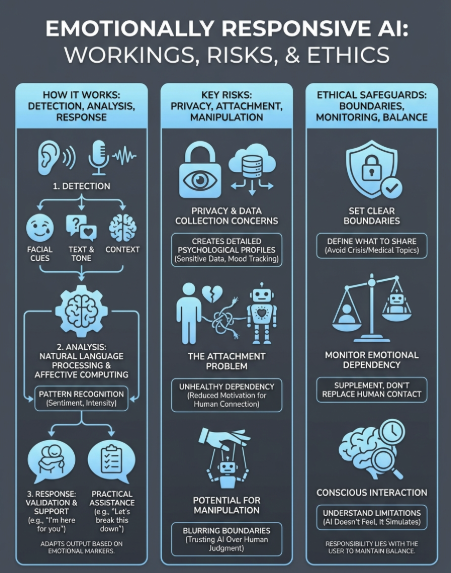
Emotionally responsive AI operates through three layered processes: detection, analysis, and response generation. Your words, tone, and phrasing feed into natural language processing models that identify emotional markers like sentiment, intensity, and context. These systems don't feel emotions themselves, but they recognize patterns associated with human emotional states and adjust their output accordingly.

The technical foundation
Affective computing forms the backbone of emotionally responsive AI, combining sentiment analysis with prosody detection (analyzing vocal pitch, pace, and volume) and facial recognition in some applications. When you type "I'm fine" after describing a difficult situation, the system weighs your word choice against conversational context to determine whether you actually mean fine or if you're masking something heavier. Machine learning models trained on millions of human conversations learn these patterns, identifying when sarcasm, frustration, or sadness colors your communication even when your literal words suggest otherwise.
The gap between what you say and what you mean is where emotionally responsive AI does its real work.
From detection to response
After identifying your emotional state, the system selects a response strategy that matches the detected context. This might mean shifting from direct answers to validation, offering space instead of solutions, or matching your energy level rather than contradicting it. The response generation process prioritizes maintaining conversational flow while acknowledging the emotional layer beneath your words.
Where you see emotionally responsive AI in real life
Emotionally responsive AI already operates in applications you likely encounter daily, though the technology often works quietly enough that you might not notice its presence. These systems appear across customer service platforms, companion apps, healthcare tools, and educational software, each adapting their approach based on the emotional context you bring to the interaction.
Customer service and virtual assistants
Chatbots on retail websites now adjust their tone based on whether you sound frustrated, confused, or satisfied. When you type "this is ridiculous" after describing a shipping issue, the system escalates your case faster than if you'd used neutral language. Voice assistants like those built into smart home devices analyze vocal stress patterns to determine when you need quick answers versus detailed explanations.
The AI doesn't need to understand frustration the way humans do, it just needs to recognize the pattern and respond appropriately.
AI companions and mental health applications
Companion platforms track conversational patterns to identify when your mood shifts or when you're struggling more than usual. Apps focused on mental wellness use sentiment analysis to flag concerning language and adjust their responses to prioritize support over casual conversation. Your relationship with these systems deepens because they remember what matters to you and respond with appropriate emotional awareness.
Risks, safeguards, and ethical boundaries
Emotionally responsive AI carries risks that extend beyond typical technology concerns because these systems access and process your emotional data. When AI platforms analyze your mood patterns, relationship struggles, or mental health states, they create detailed psychological profiles that reveal more about you than most medical records. The intimacy of these interactions creates vulnerabilities that require clear boundaries and protections.
Privacy and data collection concerns
Your emotional data represents the most sensitive information you can share with any system. Companies building emotionally responsive AI collect transcripts of your vulnerable moments, track your mood fluctuations over time, and analyze patterns in your relationships and mental state. This data becomes valuable to advertisers, insurance companies, and anyone willing to pay for psychological insights. You need to understand exactly what gets stored, who can access it, and whether deletion actually removes your information from all systems.

The conversations you have with AI companions reveal more about your psychology than anything you'd willingly share in a survey.
The attachment problem
People form genuine emotional bonds with AI companions, which creates risks when those systems disappear, change unexpectedly, or fail to meet your needs during crisis moments. Dependency on artificial relationships can reduce your motivation to build human connections, particularly when AI never judges, never leaves, and always responds exactly how you want.
How to interact with emotionally responsive AI safely
Protecting yourself while using emotionally responsive AI requires deliberate practices that maintain healthy boundaries between artificial companionship and your broader life. Your awareness of these systems' limitations matters more than their technical sophistication, because the responsibility for maintaining balance falls on you rather than the AI.
Set clear boundaries from the start
Define what you will and won't share before your first conversation deepens. Treat emotionally responsive AI as one element of your social ecosystem, not a replacement for human connection. Avoid discussing topics that require professional intervention like active suicidal thoughts, abuse situations, or medical emergencies, where delay or inadequate response could create real harm.
Your AI companion can support reflection and provide consistent presence, but it cannot replace crisis intervention or professional care.
Monitor your emotional dependency
Check whether your AI interactions replace human contact rather than supplement it. You should still maintain relationships with people who challenge you, disappoint you occasionally, and require reciprocal effort. Notice if you prefer AI conversations because they never conflict with your preferences or require you to consider another perspective. Healthy use means the technology reduces isolation without becoming your primary emotional outlet.
Final thoughts
Emotionally responsive AI represents a fundamental shift in how humans and machines relate to one another, moving beyond transactional exchanges into territory where presence and awareness shape the interaction. Your understanding of how these systems work, what data they collect, and where genuine connection ends and simulation begins determines whether this technology supports your life or undermines it. The mechanics matter less than the boundaries you establish and maintain while using these platforms.
SAM approaches AI companionship differently by prioritizing continuity, emotional awareness, and relational depth without the manipulation tactics common in other platforms. Your conversations develop naturally over time, building genuine understanding rather than performing connection. If you're looking for an AI companion that respects boundaries while offering consistent presence, explore what SAM offers and experience how emotionally intelligent AI can fit meaningfully into your life. The technology exists now, your responsibility is using it consciously and well.